
Picture this: you arrive home one afternoon to find a bright orange placard posted on your front door. It reads “UNSAFE DO NOT OCCUPY.” Your heart sinks. What just happened? What does it mean? What do you do next?
If this scenario sounds familiar or if you’re worried it could happen to your Virginia property you’re in the right place. A condemned house is one that a government authority, usually a local building or health department, has officially declared unfit for human occupancy. It can happen to anyone: inherited homes, storm-damaged properties, rentals with deferred maintenance, or houses that simply fell into disrepair over the years.
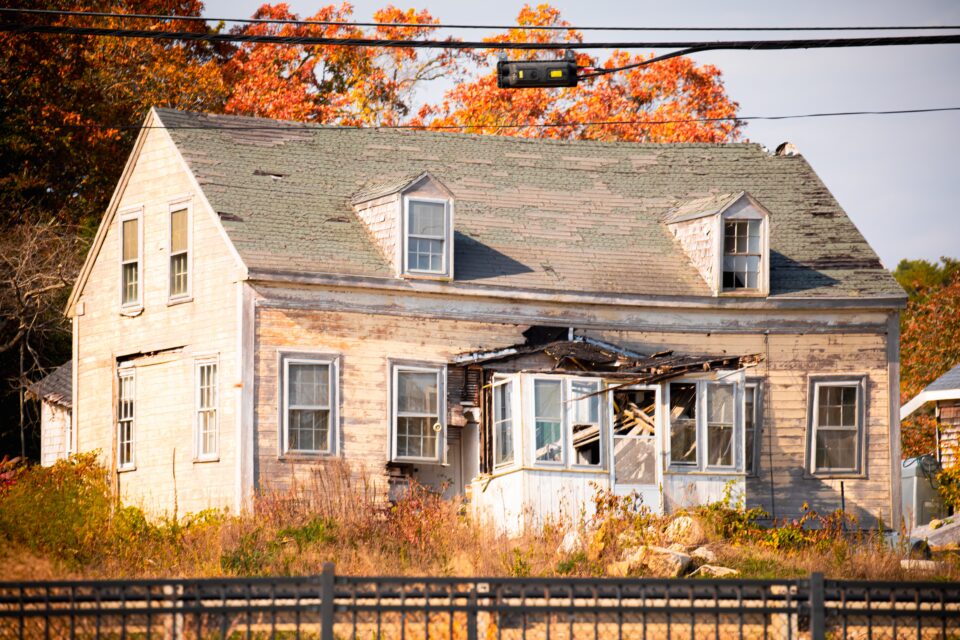
In Virginia, the word “condemned” creates immediate confusion because it is used in two very different legal situations:
- Housing condemnation – a safety or health-based declaration that a structure is unfit to live
- Eminent domain condemnation – the government takes private property for public use under Title 25.1 of the Code of Virginia, with mandatory compensation
This guide focuses on housing condemnation. By the end, you will understand exactly what triggers it in Virginia, how the process works, what your rights are as a homeowner or tenant, and what practical options are available to you including how to sell a condemned property quickly if repairs are not the right path.
What “Condemned” Actually Means Under Virginia Law
When a Virginia home is condemned for habitability reasons, it means a code official authorized under the Uniform Statewide Building Code (USBC, $ 36-97 et seq.) has inspected the property and determined it poses a threat to the life, health, or safety of its occupants or the public.
Once that determination is made, the following happens immediately:
- A placard is posted on the property, prohibiting entry
- The owner is notified in writing of the specific violations and required remedies
- The property cannot legally be occupied or rented until violations are corrected and a re-inspection is passed
In Virginia Beach, for example, Code Enforcement posts a publicly available Condemned Properties List that is updated every month. Cities across Virginia Richmond, Norfolk, Portsmouth, Fredericksburg each maintain similar enforcement programs under the USBC framework.
It is important to understand that condemnation is not the end of the road. In many cases, it can be reversed. But ignoring it will only make things worse, fines accumulate, court action may follow, and the financial pressure grows every month the property sits unresolved.
The Most Common Reasons a House Gets Condemned in Virginia
Virginia’s USBC identifies several categories of unsafe conditions that can result in condemnation. Local building officials have broad authority to act when any of these conditions are present.
Severe Structural Failures
- Collapsed or dangerously compromised roof structure
- Shifting, cracking, or failing foundation
- Extensive termite or wood rot damage that compromises load-bearing elements
- Any condition where partial or complete collapse is likely the USBC’s language is explicit on this point
In coastal areas like Virginia Beach and Hampton Roads, powerful storms leave many homes with unrepaired roof damage. If those repairs are not made, a condemned notice can follow quickly.
Health Hazards
- Black mold extensive enough to create toxic air conditions throughout the home
- Asbestos-containing materials that are damaged and releasing fibers (common in Richmond and Norfolk’s older housing stock)
- Lead paint in deteriorated condition posing exposure risk
- Rodent or vermin infestation, sewage contamination, or filth conditions
- Environmental hazards such as proximity to contaminated groundwater or underground fuel leaks
Missing or Failed Utilities
Under Portsmouth, Virginia’s condemnation code and reflected in codes across the Commonwealth a home can be condemned when essential utilities are absent or non-functional:
- No active water supply (required for sanitation and flushing toilets)
- No electricity, particularly when it affects heating and cooling safety
- No functioning heat source during winter months
- No hot water (required for basic sanitation under the USBC)
Building Code Violations & Abandonment
- Overcrowding beyond the permitted occupancy under the USBC (an “unlawful structure”)
- Properties abandoned for 180 or more days that have fallen into disrepair
- New construction where contractors failed to follow approved building plans
The Virginia Condemnation Process, Step by Step
Understanding how the condemnation process unfolds can help you act decisively and protect your interests at every stage.
Step 1 – Inspection & Identification
The process typically begins when a local authority identifies a potentially unsafe property. This can happen through:
- Routine building department inspections
- Complaints from neighbors, tenants, or other parties
- Referrals from fire marshals, health departments, or public safety officials
- Obvious visible deterioration (collapsing roofs, boarded windows, overgrown lots)
In Virginia, cities like Richmond, Virginia Beach, and Norfolk each have their own local ordinances that govern how this process is initiated, though all operate within the USBC framework.
Step 2 – Official Notice to the Owner
Once a property is flagged, the code official makes a formal finding and notifies the owner:
- A condemnation placard is posted on the property from this point, entry is prohibited
- The owner receives written notice of the specific violations and the remedy required
- If there is an immediate threat to life or safety, occupants must vacate at once with no grace period
- For non-emergency situations, the owner typically receives a defined window to address violations
Step 3 – Resolution Window
The owner has a finite period to respond. Failure to act can result in:
- Escalating fines from the city or county
- Court action initiated by the locality
- The city proceeding with demolition and charging the owner for the cost
Step 4 – Re-Inspection & Lifting of Condemnation
If repairs are made, the process for removing a condemned status in Virginia involves:
- Obtaining the necessary permits for all repair work
- Completing repairs in compliance with current local building codes
- Requesting a re-inspection from the local building authority
- Receiving a Certificate of Occupancy once inspections are passed
The good news: once a home has been fully renovated and passes inspection, the condemned status is removed. Industry professionals note that stigma associated with prior condemnation tends to fade completely after a quality renovation.
What Condemnation Means for You as the Homeowner
Immediate Legal & Practical Consequences
- It is illegal to occupy or rent the property until habitability standards are met and a re-inspection is passed
- The property value drops significantly often below the cost of required repairs
- Standard mortgage financing becomes unavailable for potential buyers
- Most standard homeowner’s insurance policies do not cover condemnation, leaving owners without financial protection
- Failure to comply with the condemnation order can result in fines, court action, or even criminal charges in severe cases
Financial Exposure
The financial burden of a condemned property can escalate quickly:
- Repair costs frequently run into the tens of thousands of dollars and can easily exceed the property’s market value
- Ongoing municipal fines pile up for every month the violations remain unaddressed
- Legal fees may be incurred if the city initiates court action
- Property taxes continue to accrue even on a vacant, condemned property
- If the city orders demolition, the owner is typically billed for the cost
Impact on Your Title and Any Future Sale
- Condemned status is attached to the property record and will appear in title searches
- Traditional MLS listings for condemned homes rarely succeed buyers cannot secure conventional financing
- Selling the land (lot value) is often more realistic than selling the structure in its current condition
- Working with a cash buyer experienced in distressed Virginia properties is the most reliable exit strategy for many homeowners
Tenant Rights When a Rental Is Condemned in Virginia
If you are a renter in a property that has been condemned, Virginia law provides significant protections under the Virginia Residential Landlord and Tenant Act (VRLTA).
Your Core Legal Rights
- You have a statutory right to a fit and habitable rental unit in accordance with the USBC ($ 55.1-1220)
- If you are excluded from your unit because it was condemned, you may sue the landlord for actual damages under $ 55.1-1243.2
- The landlord must return all prepaid rent, any security deposit, and all rent paid after the date of condemnation
- Under the recently enacted HB 957, landlords are now liable for your actual damages AND reasonable attorney fees if a building code violation they failed to address led to the condemnation and your exclusion from the property
Remedies Before Condemnation
- Give your landlord written notice of needed repairs; the landlord has a reasonable time to act (typically 14 days for life-safety issues)
- If the unit is uninhabitable from the start of your lease, you may terminate the lease and receive a full refund of deposits but you must provide written notice within 7 days of taking possession
- You may file a Tenant’s Assertion in General District Court if the landlord fails to make repairs (you must be current on rent to do so)
- There is no rent withholding in Virginia, except through the formal repair-and-deduct process
6. Your Options as a Virginia Homeowner with a Condemned Property
If your Virginia home has been condemned, you are not without options. The right path depends on the severity of the damage, your financial situation, and how quickly you need to resolve the situation.
Here is a clear comparison of your choices:
| Option | Best When | Key Consideration |
| Repair & Restore | Damage is limited; repair cost < post-repair value | Requires permits, inspections, time & significant capital |
| Appeal the Order | You believe the condemnation notice is incorrect or unjustified | Hire a Virginia real estate attorney; burden of proof is high |
| Sell As-Is to Cash Buyer | Repairs are cost-prohibitive or situation is urgent | Fastest exit; no commissions, no repairs, close in days |
| Sell the Lot | Structure is beyond saving; land retains value | Buyer demolishes and builds new; limited buyer pool |
Option A – Repair and Restore
If the repair costs are manageable relative to the property’s post-repair market value, restoring the home is a viable path. Here is what it involves:
- Obtain certified copies of the condemnation order and all violation notices
- Commission a thorough home inspection to understand the full scope of required repairs
- Obtain all necessary permits before beginning any repair work
- Complete repairs in full compliance with current local building codes
- Request a re-inspection from the local authority; receive your Certificate of Occupancy upon passing
Be realistic about the numbers. Bring a trusted contractor to the property before committing to this path many Virginia homeowners discover that repair costs exceed what the home will be worth after renovation.
Option B – Appeal the Condemnation Order
If you believe the condemnation notice is unjustified perhaps based on an inaccurate inspection or a violation that has already been corrected you have the right to appeal. A few things to know:
- Virginia’s Constitution places the burden of proof on the condemning authority to demonstrate that the taking or order is lawful and justified
- You should consult a Virginia-licensed real estate or eminent domain attorney before filing an appeal
- Appeals can be time-consuming; fines may continue to accrue during the process
Option C – Sell the Condemned Property As-Is
For many Virginia homeowners, selling the condemned property to an experienced cash buyer is the most practical and financially sound decision especially when repairs would cost more than the home is worth. This is where ccc can help.
- You cannot list a condemned home as habitable on the MLS, and traditional buyers cannot secure conventional financing
- Cash buyers purchase the property in its current condition no repairs, no cleanup, no inspections required
- Closing timelines can be as short as 14 days, stopping the accumulation of fines and legal exposure
- No realtor commissions, no closing costs, no hidden fees
- Lot-only sales are also possible: buyers purchase the land and demolish the structure to build new this is a common outcome for severely condemned properties
How Condemnation Works in Key Virginia Cities & Regions
Richmond, VA
Richmond’s code enforcement actively flags vacant and deteriorating homes, particularly in neighborhoods with older housing stock such as Church Hill, Northside, and parts of South Richmond. The Richmond circuit court has jurisdiction over formal condemnation proceedings under Title 25.1 of the Code of Virginia. Homeowners in Richmond facing condemnation notices have found that acting within the first 30 days is critical to avoiding escalating fines.
Virginia Beach, VA
Virginia Beach Code Enforcement maintains a publicly available Condemned Properties List updated each month. Coastal storms are a common trigger in oceanfront and inlet neighborhoods roof damage and flooding can quickly render homes unsafe. Note that farm structures not used for residential purposes are exempt from USBC placard requirements under Virginia Beach’s local ordinances.
Norfolk & Hampton Roads, VA
The Norfolk Redevelopment and Housing Authority has eminent domain power, though a landmark 2013 Virginia Supreme Court ruling returned a property owner’s apartment building after the Authority exceeded its lawful authority a reminder that homeowner rights in Virginia are robust. Flood-prone areas throughout Hampton Roads also face elevated environmental condemnation risk.
Fredericksburg & Northern Virginia
In the counties of Caroline, King George, Spotsylvania, and Stafford, local building departments are required to enforce the USBC Unsafe Buildings section when violations exist. Fairfax County coordinates enforcement between its Department of Code Compliance and the Fairfax County Health Department for properties that present both structural and health-related violations.
Why Virginia Homeowners Trust Home Buyers of Virginia
Dealing with a condemned property is stressful enough without having to navigate complex repairs, legal timelines, and an uncertain real estate market on top of it. That is exactly why hundreds of Virginia homeowners have turned to Home Buyers of Virginia.
We are a solutions-oriented team with a proven track record of helping Virginia homeowners in every type of difficult situation inherited homes, storm damage, mounting debt, medical bills, or properties that simply need far more work than makes financial sense. We are not afraid to roll up our sleeves.
Our process is simple:
- Contact us by phone at 804-391-0884 or fill out our online form
- We schedule a walkthrough at your convenience
- You receive a fair, no-obligation cash offer often within 24 hours
- You choose your closing date we can close in as little as 14 days or on your schedule
We buy condemned homes in Richmond, Fredericksburg, Northern Virginia, and surrounding areas. There are no realtor commissions, no closing costs, no costly repairs to make before selling, and no long waits.
Frequently Asked Questions (FAQs)
Can a condemned house be un-condemned in Virginia?
Yes. A condemned status in Virginia can be reversed. Once the violations identified in the condemnation notice are fully corrected, you must request a re-inspection from the local building authority. If the property passes inspection and meets all current code requirements, a Certificate of Occupancy is issued and the condemnation is lifted. Industry experts note that after a complete renovation, the stigma associated with prior condemnation typically disappears and the property returns to full market status.
What is the difference between an abandoned house and a condemned house in Virginia?
An abandoned house is one that has been vacated by its owner or occupants often due to foreclosure, unpaid taxes, death of the owner, or financial hardship. Abandonment is not, by itself, a legal designation. A condemned house, by contrast, is one that has been officially declared unsafe for occupancy by a Virginia government authority under the Uniform Statewide Building Code. The two often overlap: a property abandoned for 180 or more days frequently accumulates code violations that eventually trigger formal condemnation.
Can I be forced to leave my home immediately when it is condemned?
It depends on the nature of the violations. If the code official determines there is an immediate threat to life or safety such as a partial structural collapse or a gas leak occupants can be ordered to vacate the premises immediately with no advance notice. For less severe, non-emergency violations, the owner typically receives a written notice with a defined period to address the issues before vacating is required.
Does homeowner’s insurance cover a condemned property in Virginia?
In most cases, no. Standard homeowner’s insurance policies in Virginia do not include coverage for condemnation. This leaves owners without a financial safety net when a condemnation order is issued. It is important to review your specific policy carefully and consult your insurance provider, but most Virginia homeowners facing condemnation must fund repairs or resolve the situation out of pocket or by selling the property.
Can you sell a condemned house in Virginia?
Yes, you can sell a condemned house in Virginia, though the process differs significantly from a traditional home sale. You cannot list a condemned property as habitable on the MLS, and most mortgage lenders will not finance the purchase of a condemned home, which eliminates the majority of traditional buyers. However, selling to an experienced cash buyer like Home Buyers of Virginia is a well-established path. Cash buyers purchase condemned properties as-is, handle all the paperwork, and can close in as few as 14 days. Selling the lot (land value only) is another option if the structure is beyond saving.
How long does a homeowner have to fix a condemned property in Virginia?
There is no single statewide timeline the cure period depends on the specific violations cited and the local jurisdiction’s ordinances. For immediate life-safety threats, there may be no cure period at all. For non-emergency violations, cities typically provide 30 to 90 days, though extensions may be granted in some cases. Cities like Portsmouth and Virginia Beach have their own local rules that govern response timelines. If you have received a condemnation notice, contact the issuing authority immediately to confirm your specific deadline.
What happens to property taxes on a condemned house in Virginia?
Property taxes continue to accrue on a condemned home there is no automatic exemption. In Virginia’s eminent domain process (where the government takes property for public use), the locality is required by $ 15.2-1901 to reimburse the owner for any pro-rata property taxes paid after the date title transfers. However, for housing condemnation (the health/safety type), taxes continue normally and unpaid taxes will compound the financial burden, potentially leading to a tax lien on the property.
Don’t Let a Condemned Property Define Your Future
A condemned property in Virginia is serious but it is not the end of your options. The key is to act quickly. Every month that passes without resolution means more fines, more legal exposure, and more financial pressure. Whether your home has been condemned due to storm damage in Virginia Beach, structural failure in Richmond, mold in Fredericksburg, or code violations anywhere in Northern Virginia, the path forward starts with understanding your situation clearly.
If repairs make financial sense, pursue them but go in with your eyes open about the true costs. If repairs would cost more than the home is worth, or if you simply need to move forward without the burden of a distressed property, selling to a cash buyer is the most efficient and lowest-stress option available to you.
Ready to Move Forward?
Home Buyers of Virginia has purchased 550+ homes across Virginia with a proven, stress-free process.
We buy condemned houses as-is no repairs, no commissions, no hassle.Call us at 804-391-0884 today for a free, no-obligation cash offer.