
When you sell a Virginia house with leased solar panels or a power purchase agreement, the contract does not go away with the sale. One of three things has to happen before closing: the buyer assumes the lease after the solar company approves their credit, you buy out the remaining contract from sale proceeds, or the solar company removes the system. Most leases are backed by a UCC-1 fixture filing in the county land records, so the title company and the buyer’s lender will find it. A cash buyer such as Home Buyers of Virginia can take the house with the lease in place or price a buyout into the offer and close on your schedule.
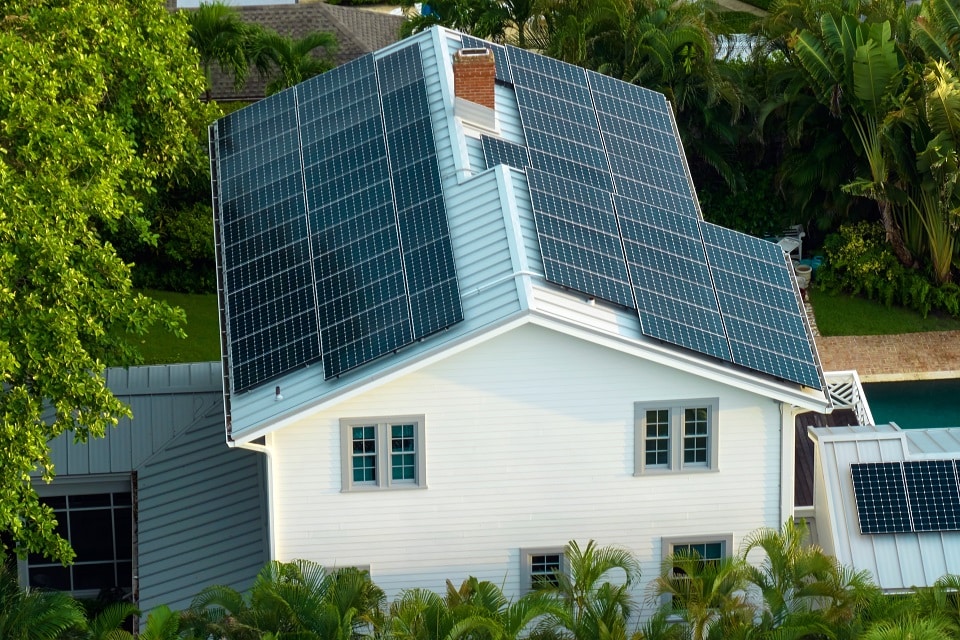
Thousands of Virginia homeowners signed solar leases and power purchase agreements between 2020 and 2023, and the first wave of those houses is now coming up for sale in Henrico, Chesterfield, Stafford and Prince William. Many sellers discover at the listing appointment, or worse at the title search, that the panels on the roof belong to a company in another state and that the contract has 15 years left.
This guide explains what actually happens to a solar lease or PPA when a Virginia house sells, why the contract shows up on your title, how buyers and lenders react, what to get from the solar company before you list, and how a direct cash sale changes the picture. It is general information, not legal or financial advice; your closing attorney can confirm how it applies to your contract.
What happens to a solar lease when you sell your house in Virginia?
The contract stays alive, and before closing it must be transferred to the buyer, paid off, or ended by removal. A solar lease or PPA is a long-term agreement between you and the solar company. The company owns the panels, inverter and racking on your roof. Selling the house does not sell the system, because it was never yours, and the company’s standard language says you cannot assign or transfer the lease without its written consent.
That leaves three outcomes:
- Transfer (assumption). The buyer applies to the solar company, passes its credit check, signs a transfer agreement and takes over the monthly payment and the remaining term. This is the outcome the solar company prefers and the one most sellers aim for. It fails when the buyer does not qualify, refuses the escalating payment, or is using a loan whose underwriter will not accept the lease.
- Buyout (prepayment). You pay the remaining contract value, usually from sale proceeds at closing, and the company releases its interest. The buyer then owns the system outright. This produces the cleanest sale but costs the most up front.
- Removal. If neither transfer nor buyout works, the company removes the system, often with a fee and a roof patch, and the lease ends. Few sellers choose this because it leaves holes in the roof and a buyer who wonders why.
Which outcome you get depends on timing. The transfer process alone often takes two to six weeks, which is why it should start the day you decide to sell, not the day you receive an offer.
Why does a solar lease show up on your title in Virginia?
Because most solar companies record a UCC-1 fixture filing in the circuit court land records of the city or county where the house sits. The filing is a public notice that a third party owns equipment attached to the real estate. It is not a mortgage, and in most cases it is not technically a lien on the land, but it reads like one to a title examiner and to a buyer’s lender.
In practice, three things follow from that filing:
- The title company will require it to be addressed. Either a transfer agreement signed by the buyer and the solar company, a payoff and release, or a termination. Closing cannot be clean with the filing unresolved.
- The buyer’s lender will treat it as an encumbrance to be reviewed. FHA and VA have specific rules for leased and PPA systems, and conventional underwriters often count the lease payment as a debt in the buyer’s ratios. Guidance from HUD governs the FHA side.
- It cannot be missed. Some title companies historically skipped UCC searches on residential closings; the Maryland construction-law commentary on solar sales was written about exactly that gap. Today most Virginia title agents search for solar filings because so many have been recorded since 2020.
The parallel with a recorded lien is close enough that our guide to selling a house with a lien in Richmond covers the same closing mechanics: the item is identified in the title commitment, a payoff or release letter is obtained, and the settlement statement handles it.
How do buyers and lenders react to a leased solar system?
Leased panels add nothing to the appraised value and add a contract the buyer has to accept, which narrows the pool of financed buyers. This is the part sellers find hardest to hear, because the panels cost someone a lot of money and they do lower the electric bill.
| Situation | Owned system (paid off) | Leased system or PPA |
|---|---|---|
| Conveys with the house | Yes, like a furnace | No; separate contract must transfer, be paid off or end |
| Appraisal | May add value depending on comps | Generally adds nothing; appraisers treat it as personal property of the solar company |
| Buyer approval | None beyond the mortgage | Solar company credit check plus lender acceptance of the lease |
| Title | Clean, unless a solar loan lien remains | UCC-1 fixture filing must be addressed at closing |
| Negotiation | Selling point | Common source of price concessions or buyer withdrawal |
The buyers most likely to walk are those using FHA or VA financing in a tight budget, where a lease payment with an annual escalator tips their debt ratios. Cash buyers and investors are the least affected because there is no underwriter in the picture. In the Richmond and Fredericksburg markets, where a large share of entry-level buyers use government-backed loans, that difference is material.
What should you get from the solar company before you list?
A written buyout quote, the transfer requirements, the full contract with its escalator schedule, and a copy of the recorded fixture filing. Having these in hand before the first showing turns the solar lease from a surprise into a line item.
- Buyout or prepayment quote in writing, dated. Quotes change as the term runs down; get a fresh one when you list and again when you go under contract.
- Transfer package. The company’s assumption application, its credit standard, how long approval takes and what fee it charges.
- The full lease or PPA. Monthly payment, remaining term, annual escalator, production guarantee, who maintains the inverter, and what happens at the end of the term.
- The UCC-1 and its filing details. Which circuit court, which year, so your title agent can locate it immediately.
- Utility account details. For Dominion Energy customers, the net metering interconnection is tied to the customer account and must be transferred or reapplied for by the buyer; Dominion Energy publishes the process. Appalachian Power and the cooperatives have their own versions.
- Production history. Twelve months of generation data from the monitoring portal, which is the one thing that makes a buyer feel better about assuming a lease.
Virginia’s Residential Property Disclosure Act is built around buyer due diligence rather than seller representations, so there is no line on the standard disclosure statement that asks about solar. Disclose the lease anyway, in writing, early. A buyer who learns of a 15-year contract from the title commitment at day 20 is a buyer who renegotiates or leaves, and a seller who withheld a known contract invites a dispute. The Solar United Neighbors seller guide recommends attaching the lease to the listing disclosures for the same reason.
What are your options if the lease is blocking the sale?
Pay for the buyout, sweeten the deal for a buyer who will assume, remove the system, or sell to a buyer who does not need a lender’s approval. Each has a cost; the question is which cost you can afford in money and in time.
Fund the buyout from proceeds
If the house has enough equity, the cleanest route is to pay the solar company at closing and sell the house with an owned system. The settlement statement handles it like any payoff. The downside is that the buyout rarely returns its full cost in a higher sale price.
Make assumption easier
Some sellers offer a credit at closing equal to a year or two of lease payments, or pre-pay a portion so the buyer’s assumed payment is lower. This works best with a buyer who already likes the house and whose lender is comfortable with the lease.
Remove the system
A last resort. Removal fees, roof penetrations to patch and a conspicuous bare roof make this unattractive, but if the lease is near its end or the panels are failing it can be the simplest exit.
Sell directly to a cash buyer
A cash buyer closes without a mortgage underwriter, so the lease does not have to pass anyone’s debt-ratio test. Home Buyers of Virginia can take the property with the lease in place and assume it, or price the buyout into the offer and pay it off at closing, whichever produces the better net for you. The offer reflects the cost of the lease either way, but so does every other path; the difference is that the cash path closes in weeks instead of cycling through buyers who cannot qualify. Our how we buy houses page walks through the steps.
How does Home Buyers of Virginia handle a house with leased solar panels?
We review the lease during the walkthrough, request the buyout and transfer terms from the solar company, and present an offer that already accounts for the contract. Virginia Home Buyers LLC is based in Fredericksburg and buys houses across the Richmond metro, the Fredericksburg region and Northern Virginia; see the full list of cities we serve.
- Send us the lease or PPA and the address; we pull the fixture filing ourselves
- We confirm with the solar company whether assumption or buyout is the better path for your net
- The offer is written with the solar contract resolved, so there is no renegotiation after inspection
- Title handles the UCC-1 release or transfer at closing; you sign once
- You pick the closing date, often within a few weeks, and you do not need to repair, clean or remove anything
The same process applies whether the house is in good shape or also needs work; see selling a house that needs repairs for how condition is priced.
Frequently asked questions about selling a house with leased solar panels in Virginia
Can I sell my house in Virginia if the solar panels are leased?
Yes. The lease or PPA has to be transferred to the buyer, bought out, or ended through removal before closing, and the solar company’s recorded fixture filing has to be addressed by the title company. Planning for that from the start is what makes the sale go smoothly.
Does a solar lease transfer automatically when the house sells?
No. The buyer must apply to the solar company, pass its credit check and sign a transfer agreement. Until that is done, the seller remains responsible for the contract.
What is a UCC-1 fixture filing on solar panels?
A public notice recorded in the circuit court land records stating that the solar company owns equipment attached to the house. It is not a mortgage, but title companies and lenders treat it as an item that must be transferred, released or terminated at closing.
Do leased solar panels add value to a Virginia home?
Generally not. Appraisers treat a leased or PPA system as the solar company’s property and give it no value. Owned, paid-off systems can add value depending on local comparable sales.
Will a buyer with an FHA or VA loan be able to assume my solar lease?
Sometimes. FHA and VA have specific requirements for leased and PPA systems, and the lease payment is usually counted in the buyer’s debt ratios. Buyers on tight budgets are the most likely to be declined or to walk away.
Should I buy out the solar lease before selling?
Get a written buyout quote first. A buyout produces the cleanest sale but rarely returns its full cost in a higher price. Compare the quote against the likely price concession or delay from an assumption, and against a cash offer that already accounts for the lease.
Do I have to disclose a solar lease when selling in Virginia?
Virginia’s disclosure law relies on buyer due diligence, and the standard disclosure statement does not ask about solar, but the lease is a recorded contract the buyer will find on title. Disclosing it in writing at listing protects you from a late-stage renegotiation or a dispute.
What happens to my Dominion Energy net metering when I sell?
The interconnection and net metering arrangement are tied to the customer account, so the buyer typically transfers or reapplies for net metering in their name after closing. Dominion Energy and the other Virginia utilities publish the steps.
Will Home Buyers of Virginia buy a house with a solar lease?
Yes. We can assume the lease or price a buyout into the offer and pay it off at closing, whichever gives you the better net, and we close without a mortgage lender’s approval.
How long does it take to sell a house with leased solar panels?
On the open market, add two to six weeks for the solar transfer process on top of a normal listing, and expect some buyers to drop out. A direct cash sale can close in a few weeks because the lease is resolved as part of the offer.
Sell your Virginia house with leased solar panels without the back-and-forth
Home Buyers of Virginia buys houses with solar leases, power purchase agreements and solar loans across Richmond, Fredericksburg and Northern Virginia. We handle the solar company, the fixture filing and the closing paperwork, and we close on your timeline with no agent commissions, repairs or appraisal contingencies. Learn more about we buy houses in Richmond or sell your house fast in Fredericksburg.
Call 804-391-0884 in Richmond or 540-735-5754 in Fredericksburg, or contact Home Buyers of Virginia online with your address and a copy of the solar agreement to get a cash offer within 24 hours.