
Yes. You can sell inherited land in Culpeper County or Orange County, Virginia without listing it with a realtor. In Virginia, solely owned real estate passes to the heirs or devisees at the moment of death under Va. Code 64.2-200, so title is already yours before probate finishes. Once the List of Heirs (Form CC-1611) is filed and, for an intestate estate, the Real Estate Affidavit (Form CC-1612) is recorded in the county where the land sits, every owner on record can sign a deed and close. Raw acreage carries risks a house does not, including land use rollback taxes, unrecorded access, failed soil evaluations and conservation easement restrictions. Selling directly to a cash land buyer lets you transfer those risks instead of paying to resolve them.
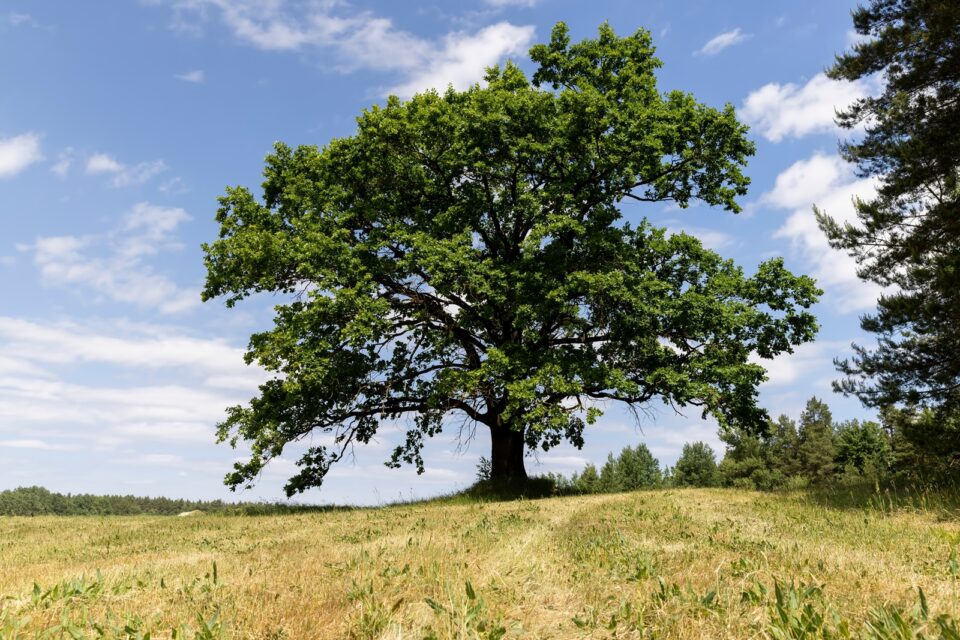
Can You Sell Inherited Land in Culpeper or Orange County Without a Realtor?
You can, and for inherited acreage it is often the faster route. Nothing in Virginia law requires a licensed agent to be involved in a land transfer. A realtor adds value when a property has an obvious buyer pool and shows well. Raw land inherited from a parent or grandparent frequently has neither. It may be twenty wooded acres off a gravel lane in Rhoadesville, a hay field in Stevensburg that a neighbor has cut for a decade under a handshake, or a remnant parcel in Rixeyville left over from a subdivision in the 1970s.
Listings on parcels like these often sit. The buyer pool is small, financing is harder than it is for a house, and most conventional buyers want a soil evaluation, a survey and a clear access easement in hand before they will write an offer. Meanwhile the estate keeps paying property taxes, mowing costs and liability insurance on ground nobody in the family intends to use.
Going direct removes the listing period entirely. A cash land buyer underwrites the parcel as it sits, absorbs the diligence, and closes on a date the heirs choose. If you want the full overview of how that works on any parcel in the Commonwealth, start with our sell land fast in Virginia page, then come back here for the details that are specific to Culpeper and Orange.
Who Legally Owns the Land After the Owner Dies in Virginia?
The heirs do, immediately. This surprises most families. Virginia is not a state where real estate sits frozen in an estate account until a judge releases it. Under Va. Code 64.2-200, solely owned real property vests in the heirs at law or in the devisees named in the will at the moment of death. Probate confirms that transfer in the public record. It does not create it.
What that means in practice: the land is already yours. The paperwork exists so a title examiner and a closing attorney can see clearly who owns it and in what shares.
The List of Heirs, Form CC-1611
When the estate is opened, the personal representative files a sworn List of Heirs (Form CC-1611) with the Clerk of the Circuit Court under Va. Code 64.2-509. Virginia requires this even when there is a valid will, because the court wants the heirs at law identified on the record regardless of what the will says. Get the names, addresses and relationships right the first time. Corrections later mean an additional filing and, worse, a title company asking questions in the middle of your closing.
The Real Estate Affidavit, Form CC-1612
If the owner died without a will, an heir records a Real Estate Affidavit (Form CC-1612) in the land records of the county where the land physically sits, under Va. Code 64.2-510. It recites the legal description, confirms the intestate status and names every heir now holding an interest. It does not transfer title by itself. It documents a transfer that already happened.
This is where Culpeper and Orange heirs trip most often. The affidavit is recorded where the land is, which is frequently not where the decedent lived or where the estate was opened. A Fairfax resident who dies owning ninety acres outside Unionville has an estate qualified in Fairfax and a Real Estate Affidavit that belongs in the Orange County Circuit Court land records. Filing it in the wrong jurisdiction produces a clean-looking file and a title defect.
Will Versus No Will
With a will, the land goes to the devisees named to take it, and the executor qualifies with the Clerk to receive Letters Testamentary. Without a will, it passes under Virginia intestacy rules, which can spread ownership across siblings, then nieces and nephews, then cousins, in fractional shares. Each generation that passes without a deed being recorded multiplies the number of signatures a closing will need. Our inherited home selling guide covers the same mechanics as they apply to improved property.
What Makes Inherited Land Different From an Inherited House
Almost every article you will find on selling inherited property in Virginia is written about houses. The advice does not port cleanly. Here is what actually changes when the asset is dirt instead of a dwelling.
- There is no comparable sale down the street. Residential appraisals lean on nearby sales of similar homes. Two adjoining parcels in Culpeper County can differ wildly in value because one has road frontage and passing soils and the other does not.
- Financing is harder for your buyer. Most banks treat raw land as a higher-risk asset and require larger down payments. That thins the buyer pool for a listed parcel considerably.
- Carrying costs never stop. Property taxes are due in Culpeper County on December 5 each year whether anyone is using the ground or not. Add mowing, fence repair and liability exposure.
- Tax classification can reverse on you. An enrolled parcel is taxed on what it earns as farm or forest land, not what a developer would pay. Change that use and the deferred taxes come due.
- Buildability is an open question. A house proves the site works. Bare land proves nothing until someone digs test pits.
- Access may be a handshake, not a deed. Rural families cross each other’s ground for generations without recording anything. That arrangement does not survive a sale to a stranger.
The Land Use Rollback Tax Most Heirs Never See Coming
If the inherited parcel is enrolled in land use taxation, a sale or a change in use can trigger back taxes for the current year plus the five preceding years, with interest. This is the single largest avoidable surprise in Culpeper and Orange County inherited land transactions, and it is almost entirely absent from the national articles ranking for this topic.
Virginia authorizes localities to assess qualifying land on its use value rather than its market value under Title 58.1, Chapter 32 of the Code of Virginia. Culpeper County participates. Culpeper’s land use program covers agricultural, horticultural, forest and open space categories. To qualify, an owner must show the land has been in the qualifying use for the five previous years, using federal Schedule F or E, a lease affidavit or a forest management plan, and must apply at least sixty days before the tax year.
The savings are real while the land stays in the program. The exposure appears when it leaves. Under Va. Code 58.1-3237, when the use or zoning changes, the locality assesses roll-back taxes equal to the deferred tax for the five most recent complete tax years plus the current year, with simple interest. The liability attaches to the portion of the parcel that no longer qualifies.
Three rollback facts that decide who pays
- Whoever changes the use owes the tax. If you sell farmland and the buyer later builds, the buyer generally triggers and owes the rollback. If you take the land out of production before closing, you triggered it.
- Ownership changes do not automatically carry the classification. A new owner must file a transfer application to continue in the program. Many heirs assume enrollment travels with the deed. It does not.
- Splitting a parcel restarts the paperwork. When acreage changes or a parcel is divided, a new application and fee are required.
Before you do anything with an inherited Culpeper or Orange parcel, call the county assessor and ask one question: is this parcel currently in land use, and what is the accrued rollback exposure? In Culpeper the Assessor’s office is at 118 W. Davis Street, Suite 100, and handles land use administration directly. Virginia Cooperative Extension also publishes a plain-language citizens guide to use value taxation that is worth ten minutes of your time.
Why this matters when you sell direct: a buyer who understands rollback exposure prices it into the offer openly instead of discovering it during a title search and renegotiating a week before closing. That is a large part of why inherited land deals collapse late.
Conservation Easements and Agricultural and Forestal Districts
The Virginia Piedmont is one of the most heavily conserved landscapes in the eastern United States. The Virginia Outdoors Foundation, created by the General Assembly in 1966, holds perpetual open space easements on more than eight hundred thousand acres statewide, and Culpeper, Orange, Madison, Rappahannock and Fauquier counties are squarely inside its most active region.
If the land your family left you carries a recorded conservation easement, three things are true. The restrictions are perpetual and run with the land, so they survive the inheritance. Subdivision, timber harvesting, new construction and sometimes even conveyance may require review and approval by the easement holder. And the easement permanently changed the market value of the property, which is a fact your appraisal and any offer must reflect.
Agricultural and forestal districts are a separate program with a separate consequence. Land inside a district gets use value assessment without needing a local ordinance, but withdrawing early can carry penalties. Pull the deed and the full title chain before you assume the parcel is unencumbered. Easements recorded in the 1980s and 1990s are common in both counties and are not always remembered by the family.
Soil Evaluation, Septic Feasibility and Whether the Parcel Is Buildable
In rural Culpeper and Orange County there is no public sewer, so a parcel that cannot support an onsite sewage system usually cannot support a house. That single fact drives land value more than acreage does.
Virginia no longer relies on the old percolation test alone. The current standard is a soil evaluation performed by a licensed Onsite Soil Evaluator or Alternative Onsite Soil Evaluator, credentialed through the Department of Professional and Occupational Regulation. The evaluator digs test pits, reads soil horizons, checks depth to the seasonal water table and looks for restrictive layers such as bedrock or hardpan, then submits a report to the Virginia Department of Health. VDH will not accept a septic permit application for new construction without one.
The outcome falls into three broad categories, and each carries a different value:
- Conventional gravity system approved. Best case. Adequate soil depth and drainage. The parcel is straightforwardly buildable and commands the strongest interest.
- Alternative or engineered system required. Dense, shallow or wet soils push the site toward a mound, pressure distribution, drip or aerobic treatment unit. Still buildable, at materially higher installation cost, which buyers deduct.
- No approvable drainfield location. The parcel will not support a dwelling under current regulations. It still has value as recreational ground, hunting land, an addition to an adjoining farm, or a timber hold, but not as a homesite.
Many heirs pay for a soil evaluation hoping to improve the sale, then receive a category three result that they now must disclose. A direct buyer who purchases as is takes that uncertainty on rather than making you buy the answer first.
Access, Right of Way and Landlocked Parcels
Ask any closing attorney in Culpeper or Orange what kills inherited land deals and access will be near the top of the list. Family parcels were often carved out informally. Grandfather crossed his brother’s field to reach the back forty for forty years. Nobody recorded an easement because nobody needed to.
A title examiner cannot rely on that history. If there is no recorded easement and no frontage on a public road maintained by VDOT, the parcel is legally landlocked. Virginia law provides remedies, including easements by necessity, but pursuing one means a Circuit Court action, an attorney and a timeline measured in months.
- Pull the plat and the deed and confirm whether frontage exists on a state maintained road.
- Look for a recorded easement by name in the chain of title, not just a driveway on an aerial photo.
- Check whether an easement is deeded to the parcel or was personal to a prior owner.
- If the access crosses a neighbor’s land, find out whether that neighbor is a cousin, because heirs property on both sides compounds quickly.
Landlocked does not mean unsellable. It means the buyer pool narrows to adjoining owners and to buyers who are comfortable with the risk. That is a category where a direct purchase usually beats a listing.
When Heirs Disagree: Virginia’s Heirs Property Law
One co-owner cannot sell the whole parcel alone, but any co-owner can ask a court to force a sale. That tension is the reason so much family land in Virginia sits idle for decades.
When land passes intestate to multiple heirs, they hold it as tenants in common. Each owns an undivided fractional interest in the whole, not a specific corner. Virginia’s partition statutes sit at Va. Code 8.01-81 and following. In 2020 the General Assembly unanimously adopted key provisions of the Uniform Partition of Heirs Property Act, making Virginia the sixteenth state to do so.
The reform matters. Before it, a single fractional owner, sometimes a distant relative who had never set foot on the ground, could file a partition action and force a below-market auction. Under the current framework, the other co-owners receive notice, the court orders an appraisal, and the remaining co-owners get a right of first refusal to buy out the selling interest at the appraised value before any open-market sale is ordered. The court may still order partition in kind, physically dividing the tract, or a commercially reasonable sale at fair market price.
Practical takeaway for a family with five heirs and a hundred acres near Lignum or Locust Grove: a negotiated sale where everyone signs the same deed is faster, cheaper and less damaging to relationships than a partition suit. A buyer who has handled multi-heir closings can work with the group, coordinate signatures across states and hold a closing date while the paperwork catches up.
Culpeper County and Orange County: What Sellers Should Know Locally
These two counties share a border and a history. Culpeper was formed out of Orange County in 1749. They do not share the same land market, and the differences affect how an inherited parcel should be handled.
| Factor | Culpeper County | Orange County |
| Population | About 54,400 residents across roughly 379 square miles | About 36,300 residents across roughly 343 square miles |
| Farms and farmland | 609 farms covering about 115,816 acres, averaging roughly 190 acres per farm | 430 farms covering about 103,983 acres, averaging roughly 242 acres per farm |
| Farmland trend | Down from 682 farms and about 124,390 acres five years earlier, a meaningful contraction | Fewer, larger operations; parcels that leave agriculture rarely return |
| Character of demand | Route 29 corridor and proximity to Warrenton and Fredericksburg support residential and commercial interest | Rural and estate demand anchored by Montpelier, Gordonsville and the Lake Anna area |
| Where land records are kept | Culpeper County Circuit Court, Town of Culpeper | Orange County Circuit Court, Town of Orange |
| Common parcel types inherited | Hay and pasture ground, small cattle tracts, subdivision remnants, wooded lots | Timber tracts, horse and estate parcels, lake-adjacent lots, historic farm acreage |
| Communities we buy in | Culpeper, Brandy Station, Rixeyville, Stevensburg, Lignum, Mitchells, Boston, Jeffersonton, Elkwood, Richardsville, Rapidan | Orange, Gordonsville, Barboursville, Locust Grove, Rhoadesville, Unionville, Lake Anna |
The farmland contraction in Culpeper is the number heirs should sit with. Roughly eight and a half thousand acres left farm status in a five year span between the two most recent USDA agricultural censuses, and the number of farms fell by more than seventy. Land that stops being farmed usually stops being farmed permanently, which is precisely the moment land use rollback exposure becomes real.
If your parcel sits in one of these communities, we maintain local pages for Culpeper, Orange County, the Town of Orange, Gordonsville, Locust Grove and Rhoadesville.
Taxes When You Sell Inherited Land in Virginia
Virginia has imposed no state estate tax and no inheritance tax since July 1, 2007. Receiving the land costs you nothing at the state level. Selling it may create a federal capital gains event, and the stepped-up basis rule usually keeps that small.
Your cost basis in inherited property resets to its fair market value on the date of death, not what the original owner paid. If your grandfather bought two hundred acres in Orange County in 1962 and it was worth substantially more on the day he died, that appreciation is not taxed to you. Only gain measured from the date-of-death value forward is taxable when you sell.
That makes a date-of-death valuation one of the most valuable pieces of paper an estate can produce, and one of the most commonly skipped. An appraisal dated near the date of death, or a well-supported assessor valuation, protects the basis. Without it, the family reconstructs the number years later under less favorable conditions.
Rollback taxes are a separate obligation from capital gains and are owed to the county, not the IRS. Be sure your closing attorney accounts for both. We are a land buyer and not a tax advisor, so confirm your specific situation with a Virginia CPA or estate attorney before you close.
Your Three Options for Selling Inherited Land
| List with a realtor | Sell it yourself | Sell direct for cash | |
| Typical timeline | Months of market time plus a financing contingency | Open ended, depends entirely on finding a buyer | Days to a few weeks, on your date |
| Commission | Paid out of proceeds at closing | None | None |
| Who pays for a soil evaluation | Usually the seller, to make the parcel marketable | Usually the seller | Not required to get an offer |
| Survey and boundary work | Often requested by the buyer | Often requested by the buyer | Handled by the buyer where needed |
| Rollback tax exposure | Discovered in title search, often renegotiated late | Frequently missed entirely | Priced into the offer up front |
| Multi-heir signature coordination | Left to the family and the closing attorney | Left to the family | Coordinated by the buyer |
| Condition and access issues | Must generally be resolved before sale | Must generally be resolved before sale | Purchased as is |
| Certainty of closing | Depends on buyer financing and inspections | Low | High, no lender involved |
None of these is universally correct. A clean, road-fronted, perc-approved building lot near the Town of Culpeper may do very well on the open market, and we will tell you so. A landlocked wooded tract with four out-of-state heirs, an active land use enrollment and no recorded easement is a different animal, and a listing will usually just cost the estate another season of carrying costs.
How Home Buyers of Virginia Buys Inherited Land in Culpeper and Orange County
Home Buyers of Virginia is a Virginia based buyer working from Fredericksburg, which puts Culpeper and Orange inside our regular buying footprint rather than at the edge of a national call center’s map. We purchase land as it sits, in any condition, including parcels other buyers have already walked away from.
- Tell us about the parcel. Call or send the tax map number and county. You do not need a survey, an appraisal or a soil report.
- We research the record. We pull the deed, plat, assessment, land use status and access before we quote, so the number we give you accounts for what is actually there.
- You receive a written no-obligation offer. No fees, no commission, no listing agreement, no obligation to accept.
- We coordinate the heirs. We work with your closing attorney on the List of Heirs, the Real Estate Affidavit and signature logistics across states.
- You choose the closing date. Closing happens at a Virginia attorney’s office or title company. You do not need to travel to Virginia to sell Virginia land.
We buy houses and land across the region as well, from the counties and cities listed here. If you want the mechanics of our buying process spelled out further, our how we buy houses FAQ page answers the most common questions.
Frequently Asked Questions About Selling Inherited Land in Culpeper and Orange County
Can I sell inherited land in Culpeper County without a realtor?
Yes. Virginia law does not require a real estate agent to transfer land. Once the estate paperwork identifies the owners of record, every person holding an interest can sign a deed at closing. Selling directly to a cash land buyer removes commission, listing time and the marketing period that raw acreage in Culpeper County often needs on the open market.
Do I have to finish probate before selling inherited land in Virginia?
Not necessarily. In Virginia, solely owned real estate passes to the heirs or devisees at the moment of death under Va. Code 64.2-200, so title is already vested before probate concludes. What a closing needs is a clear record of who owns it, which normally means the List of Heirs (Form CC-1611) filed with the Clerk and, for an intestate estate, the Real Estate Affidavit (Form CC-1612) recorded in the county where the land sits. Estate debts must also be resolved so no claim clouds the title.
What is a rollback tax and will I owe one on inherited Culpeper or Orange County land?
A rollback tax is the recapture of property taxes that were deferred while land was assessed at its use value as farm, forest, horticultural or open space land. Under Va. Code 58.1-3237, when the qualifying use changes, the locality assesses the deferred tax for the five most recent complete tax years plus the current year, with interest. Whether you owe it depends on who changes the use and when. Call the county assessor and ask whether your parcel is currently enrolled before you make any decisions.
What happens if my siblings and I disagree about selling the land?
Heirs who inherit land together hold it as tenants in common, and no single owner can convey the whole parcel alone. Any co-owner can file a partition action under Va. Code 8.01-81 and following. Since Virginia adopted provisions of the Uniform Partition of Heirs Property Act in 2020, the other co-owners must receive notice, the court orders an appraisal, and remaining co-owners get a right of first refusal to buy the selling interest before any forced sale. A negotiated sale where everyone signs the same deed is almost always faster and cheaper than litigation.
Does inherited land in Orange County have to be buildable before I can sell it?
No. Buildability affects value, not the ability to sell. Rural parcels in Orange County generally rely on onsite sewage systems, and a licensed Onsite Soil Evaluator must perform a soil evaluation before the Virginia Department of Health will issue a septic permit. Land that will not support a drainfield still has value as recreational ground, hunting property, timber or an addition to an adjoining farm. A cash buyer who purchases as is does not require you to produce a passing soil report first.
Do I owe capital gains tax when I sell inherited land in Virginia?
Virginia has had no state estate tax or inheritance tax since July 1, 2007, so receiving the land is not taxed at the state level. Federal capital gains may apply when you sell, but the stepped-up basis rule resets your cost basis to the fair market value on the date of death. Only appreciation after that date is taxable. A date-of-death appraisal is the single most useful document for protecting that basis. Confirm your situation with a Virginia CPA.
How long does it take to sell inherited land in Culpeper or Orange County?
A direct cash sale can close in a matter of days to a few weeks once the ownership record is clear, because there is no lender, appraisal contingency or inspection period. The variable is the estate paperwork. If the List of Heirs has been filed and the Real Estate Affidavit recorded in the correct county, closing moves quickly. If the chain of title runs back through two generations of unrecorded transfers, expect additional time to clear it.
Can I sell inherited land that is landlocked or has no recorded access?
Yes, though it changes who the realistic buyers are. If there is no frontage on a state maintained road and no recorded easement, the parcel is legally landlocked and most conventional buyers and lenders will walk. Virginia recognizes easements by necessity, but obtaining one requires a Circuit Court action. Direct buyers and adjoining landowners are usually the practical market. We buy landlocked parcels in both Culpeper and Orange County.
What if the inherited land is under a conservation easement?
Conservation easements in Virginia are perpetual and run with the land, so they survive the inheritance and bind every future owner. The Virginia Outdoors Foundation and regional land trusts hold easements across the Piedmont, including Culpeper and Orange. Restrictions commonly limit subdivision, new construction and timber harvesting, and some activities require the holder’s prior review. You can still sell the land. The easement is a permanent feature of value that any honest offer must account for.
What documents do I need to sell inherited land in Virginia?
At minimum you will need a certified copy of the death certificate, the recorded deed showing how the decedent held title, the List of Heirs (Form CC-1611), and for an intestate estate the recorded Real Estate Affidavit (Form CC-1612). Letters Testamentary or Letters of Administration are required if the personal representative is signing. The plat, the most recent tax assessment and any land use enrollment records help, and a date-of-death valuation protects your tax basis. You do not need a survey or a soil report to receive a cash offer from us.
Get a No-Obligation Cash Offer on Your Inherited Land
Ready to find out what your inherited land is worth? Home Buyers of Virginia buys inherited land in Culpeper County and Orange County exactly as it sits, with no commissions, no repairs and no clean-up required. Whether your parcel is enrolled in land use, held by several heirs, landlocked or still working its way through the Circuit Court, we can give you a straight answer and a written offer with no obligation. Call us at 804-214-6410 or reach us through our contact page and tell us the county and tax map number. We will do the record research and come back to you with a number and a closing date you choose.